
RiseGuide: Expert Insights
RiseGuideEducation
4.2693.00 Reviews
- Version
- 2.0.1056
- Installs
- 100.00K
- Age Rating
- Everyone
Screenshots
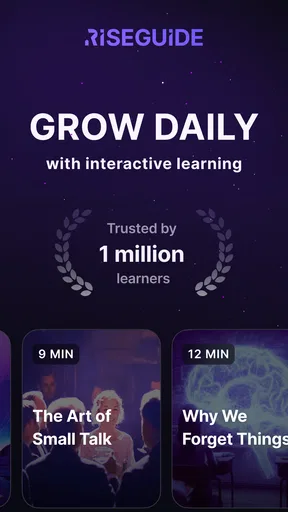
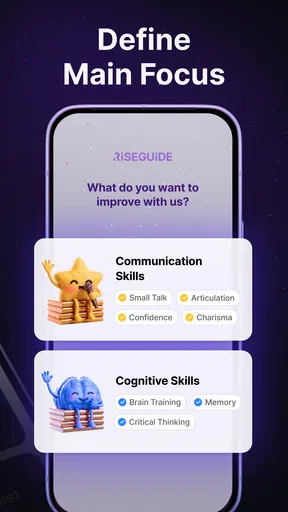
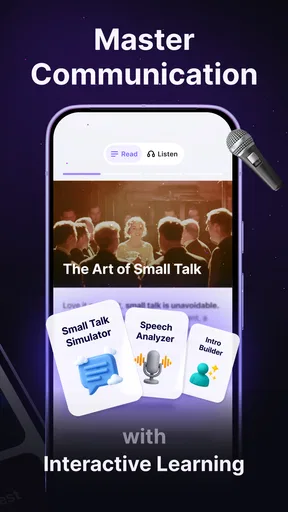
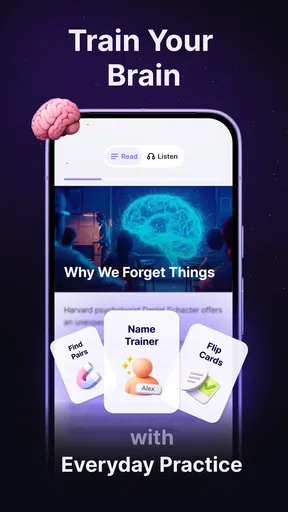
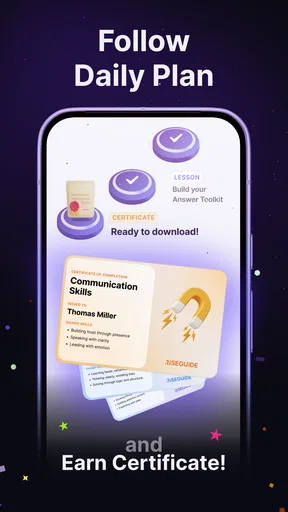
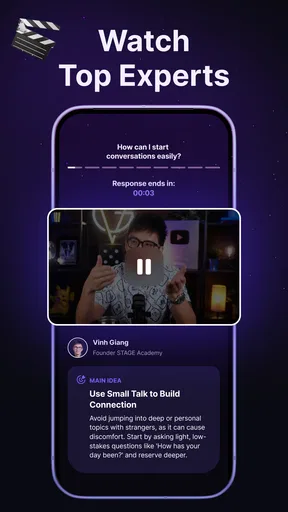
Our Review of RiseGuide: Expert Insights
 Analysis by Appyee
I approached RiseGuide: Expert Insights as a small daily learning tool rather than a traditional course. Developed by RiseGuide, this free education app focuses on self-improvement through lessons connected with articulation training and communication skills. That combination makes it more practical than an app that only presents motivational thoughts, but it also means the experience is aimed at gradual personal practice rather than instant transformation.
My first impression was that its appeal depends on consistency. If you want a short routine that reminds you to pay attention to how you speak, explain ideas, and communicate with other people, it has a clear purpose. If you are looking for a complete speech-therapy program, a live teacher, or a structured academic qualification, I would set expectations differently. The app is best understood as a guided companion for everyday improvement.
How RiseGuide fits into everyday learning
The app belongs to the education category, but its subject matter sits close to personal development. That distinction matters. I did not treat it like a dictionary, a language-learning platform, or a public-speaking course with long classroom modules. Its central promise is more focused: regular lessons that encourage better articulation and stronger communication habits.
That focus gives it a useful place in a busy routine. A person preparing for interviews, presentations, meetings, customer conversations, or social situations may not need another large library of unrelated lessons. They may need a simple prompt to stop, notice a speaking habit, and work on it deliberately. RiseGuide is designed around that kind of attention.
The store summary presents daily lessons for self-improvement, articulation training, and communication skills. In practice, I would use those themes as a reason to build a repeatable habit, not as a promise that the app can diagnose every speech problem. Better communication comes from applying ideas aloud, listening to yourself, and adjusting over time. The app can support that process, but it cannot replace the effort involved.
It is also worth knowing where the product sits in its life cycle. It was released on December 5, 2024, and the current version is 2.0.1056. The app has reached over 100 thousand installs and holds an average rating of 4.2 from around 4.3 thousand ratings, with roughly 693 written reviews. Those figures suggest that it has attracted a meaningful audience, while the rating also leaves room for a realistic view: many users may find it useful, but it will not suit every learning style.
A practical way to use the daily format
I would not open RiseGuide only when an important presentation is already tomorrow. That turns communication training into emergency preparation, and small lessons rarely have enough time to change a deeply established habit overnight. A better workflow is to use one lesson as a daily starting point, then connect it to a real conversation later in the day.
For example, imagine that I have a team meeting after lunch. I could complete a lesson in the morning, choose one idea to remember, and then apply it during the meeting instead of trying to improve everything at once. Afterward, I could make a quick mental note about whether I spoke too quickly, lost clarity, interrupted, or failed to explain a point in a logical order. This turns passive reading into a small experiment.
That approach is one of the app’s more important strengths. Communication is difficult to improve when it remains abstract. A lesson becomes more valuable when it changes one behavior in a real setting. I found that choosing a single focus works better than collecting advice without practicing it.
Another useful routine is to pair the app with a weekly situation rather than a vague goal. “Become a better communicator” is too broad to measure in daily life. “Explain my project update in three clear points” is more concrete. RiseGuide can provide the daily nudge, while the user supplies the situation in which the skill matters.
What the free access means for value
RiseGuide is free to download and use as an entry point, which lowers the risk for anyone curious about its approach. That makes it easier to test whether daily communication lessons fit your routine before spending money. I appreciate that distinction because self-improvement apps can look appealing in a store and then feel irrelevant after a few sessions.
There are in-app purchases priced from $9.99 to $79.99 per item. Since those purchases cover a wide range, I would not assume that every useful part of the experience requires payment, nor would I assume that paying automatically makes the lessons more effective. The sensible decision is to begin with the free access, understand how often you actually return, and judge any paid option by the specific additional value it offers to you.
This is especially important for a communication app. The main cost is not always the purchase itself; it is the time required to practice. If I rarely complete lessons or never apply them aloud, even an inexpensive upgrade would have poor value. On the other hand, someone who uses the app consistently and wants deeper access to its learning material may consider a paid item worthwhile after experiencing the free portion.
I would also avoid buying simply because a larger package sounds more complete. For this kind of tool, a smaller commitment can be the better test. Use the free experience long enough to see whether the lesson style keeps your attention and whether the subjects match your needs. Only then should you compare the available purchase with the amount of practice you realistically expect to get from it.
Where the lessons can help most
The strongest use case is regular, low-pressure practice. Someone who feels nervous speaking in groups may benefit from having communication on their mind before entering those situations. The app can help turn a broad concern into a daily learning task, which is less intimidating than trying to “fix” public speaking all at once.
It may also suit people who already communicate reasonably well but want more intention behind their speech. A manager explaining a decision, a student preparing an oral presentation, or a professional attending repeated meetings can use the lessons as reminders to be clearer and more deliberate. In these cases, the app is not necessarily teaching a completely new identity; it is encouraging refinement.
Articulation training gives the experience a more specific angle than general confidence apps. If I notice that I rush words, blur sounds, or lose clarity when tired, I can use the daily focus as a prompt to slow down and pay attention. The benefit comes from repeating that awareness in real conversations, not from reading a lesson once and moving on.
There is also value for people who prefer private practice. Not everyone wants to join a speaking club, record themselves for public feedback, or book a coach immediately. A phone-based routine offers a less exposed first step. That privacy can make it easier to admit that a communication habit needs work.
Three habits that make the app more useful
The first is to read or complete the lesson before a predictable communication event. I would connect it to a meeting, phone call, class discussion, or family conversation. This gives the lesson a clear purpose and makes it easier to remember. Without that connection, daily learning can become a box-ticking exercise.
The second is to practice out loud whenever the lesson relates to speech. Silent reading may help me understand an idea, but it does not test whether I can actually articulate it. I would repeat an explanation in my own words, say it at a comfortable pace, and notice where I stumble. This simple step creates a bridge between education content and speaking behavior.
The third is to keep the goal narrow for a full day. If I try to improve pronunciation, speed, vocabulary, confidence, listening, and structure during one conversation, I will probably notice little progress. Choosing one target makes the app’s daily format more practical. It also helps me decide whether a lesson produced a visible change rather than merely sounding interesting.
A fourth habit is to treat the app as a prompt, not an authority. I would compare its advice with the demands of my situation. A technique that helps during a presentation may not be appropriate in a relaxed conversation. Communication is contextual, and applying every lesson mechanically could make speech feel unnatural. The best result comes from adapting the idea to the person and setting.
Tradeoffs compared with familiar alternatives
Compared with watching free communication videos, RiseGuide offers a more focused daily path. Video platforms provide variety and sometimes show demonstrations, but they also make it easy to jump between unrelated topics. A lesson-based app can be better for someone who needs structure and a reminder to return regularly.
Compared with a language-learning app, RiseGuide is not aimed primarily at acquiring another language or memorizing vocabulary. Its emphasis is communication behavior and articulation. If my main problem is grammar in a second language, I would choose a dedicated language platform instead. If I already know what I want to say but struggle to express it clearly, this app’s focus may be more relevant.
Compared with a speech coach or therapist, the app is more accessible and less personal, but also less tailored. A professional can observe an individual pattern, ask follow-up questions, and adjust exercises to a specific need. RiseGuide is better for general practice and self-guided improvement. Anyone with a persistent speech difficulty, pain, or concern about a medical issue should not treat a general education app as a substitute for qualified help.
Compared with journaling, the app provides a subject to think about instead of requiring me to invent one. Journaling may be more effective for exploring emotional barriers or tracking detailed reflections, while RiseGuide is more convenient when I want a ready-made learning prompt. The two can work together: complete a lesson, then write one sentence about how it appeared in a real conversation.
The tradeoff is therefore clear. The app offers direction without the depth of personal coaching. It may be easier to maintain than a long course, but it may not satisfy someone who wants extensive exercises, detailed feedback, or a formal progression. I see that as a design limitation rather than a flaw, provided users choose it for the right reason.
Who should try it, and who should skip it
I would recommend trying RiseGuide if you want a free starting point for communication practice, prefer short daily learning, and are willing to apply ideas away from the screen. It is particularly suitable for people who know they need to speak more clearly but feel overwhelmed by broad self-improvement programs. The Everyone content rating also makes it accessible to a wide audience, although age alone does not determine whether the lesson style will be a good fit.
Students can use it before presentations or group discussions. Job seekers may find the daily focus useful while preparing for interviews. Professionals can connect lessons with meetings and explanations. Someone returning to work after a long break may also appreciate a private way to rebuild confidence before taking on more demanding conversations.
I would skip it if I want live correction, a detailed speech assessment, or a guaranteed curriculum designed around one highly specific problem. I would also skip it if I dislike daily routines and prefer occasional, long-form study. The app’s value depends on returning often enough for the ideas to influence behavior.
People who expect a purchase to solve communication problems without practice should also look elsewhere. Paying for more content cannot remove the need to speak, listen, repeat, and reflect. The free access is useful precisely because it lets users test whether they are prepared to do that work.
Device, access, and everyday practicality
The app supports devices running Android 7.0 or later, so compatibility should be comfortable for many Android users with older phones. That is helpful for an education tool intended to become part of a routine; it does not require everyone to own a recent device simply to begin exploring the lessons.
Because the app is free to start, I would install it with one specific communication situation in mind rather than browsing without a plan. Decide whether the immediate need is clearer explanations, more controlled articulation, or greater confidence speaking aloud. Then judge the experience by whether it helps you take a practical step toward that goal.
I would also pay attention to how the routine fits my day. Morning use may work for someone preparing for work, while evening use may be better for reviewing a conversation and identifying a habit to improve tomorrow. The best time is the one that leaves enough mental space to practice rather than rush through the lesson.
My verdict on the free-to-paid decision
RiseGuide earns a place on my shortlist for people who want approachable communication practice without immediately committing to a coach or a large course. Its free access makes experimentation sensible, and its daily focus gives self-improvement a clearer shape than random browsing. The 4.2 average rating and growing install base support the view that it has found an audience, while the experience still requires personal effort to become meaningful.
I would start free, use the lessons alongside real conversations, and wait before considering an in-app purchase. If the routine helps me notice and change a specific speaking habit, a paid item may offer reasonable value for continued learning. If I only open it occasionally or want individualized correction, spending up to $79.99 on an item would not be a convincing choice for me.
My final recommendation is therefore conditional but positive: try it if you want a gentle daily structure for articulation and communication skills. Keep it if the lessons lead to actual practice. Skip the purchase, and possibly the app itself, if what you really need is professional assessment, live feedback, or a specialized language program. The best reason to use RiseGuide is not that it promises instant confidence, but that it can make one small communication improvement easier to practice today.
Verdict
Strengths of RiseGuide: Expert Insights
- Clear expert guidance makes complex topics easier to understand.
- Well-organized insights help users find relevant information quickly.
- Useful for comparing viewpoints before making informed decisions.
- Convenient mobile access supports learning wherever you are.
- Regularly updated content can keep users informed about new developments.
Limitations of RiseGuide: Expert Insights
- Some expert content may require a paid subscription or in-app purchase.
- Advice quality can vary depending on the topic and contributor.
- The app may feel overwhelming for users seeking only quick answers.
- Personalized recommendations may need time to become truly relevant.
- An internet connection may be needed to access the latest insights.
Similar Picks in This Category
View All
Duolingo: Language Lessons
Duolingo4.7

Google Classroom
Google LLC2.8

Unacademy: Learn & Crack Exams
Unacademy3.2

Bible App for Kids
Life.Church4.4

Cake - Learn English & Korean
Cake Corp.4.7

Brainly: AI Homework Helper
Brainly4.5
Frequently Asked Questions
What is RiseGuide: Expert Insights, and what can I use it for?
RiseGuide: Expert Insights is designed to provide users with practical guidance, expert-oriented information, and helpful insights in an easy-to-browse mobile format. It may be useful when you want to explore advice, learn about personal development topics, or find ideas for improving everyday decisions. The exact content and available categories can vary by version, so review the app description and screenshots before downloading.
Is RiseGuide: Expert Insights free to download and use?
The app may be available as a free download, but some features, articles, tools, or premium insights could require in-app purchases or a subscription. Before starting a trial or entering payment details, check the current pricing, renewal terms, and cancellation policy shown in the App Store or Google Play listing. Availability and costs can also differ depending on your country and device.
Does RiseGuide: Expert Insights provide professional or personalized advice?
RiseGuide: Expert Insights can offer educational guidance and general recommendations, but users should not automatically treat its content as a substitute for advice from a licensed professional. If you are using information related to health, finances, relationships, work, or other important decisions, compare the suggestions with trusted sources and seek qualified assistance when necessary. Personalization may also depend on the app’s available settings.
Does RiseGuide: Expert Insights require an internet connection or an account?
Many insight-based applications need an internet connection to load new content, synchronize preferences, display recommendations, or verify subscriptions. Some previously viewed material may work offline, although this depends on the app’s design. An account may also be required for saving progress, accessing premium features, or using the same profile across devices. Check the onboarding screens and privacy information for current requirements.
Is my personal information safe when using RiseGuide: Expert Insights?
Before using RiseGuide: Expert Insights, review its privacy policy and the data-safety details listed on your platform’s store page. Pay attention to whether the app collects account information, usage activity, device data, or responses entered while requesting recommendations. Avoid submitting highly sensitive information unless it is clearly necessary, and use the available privacy controls to limit permissions, notifications, and personalized tracking.
